
|
|

|

Jack the Lizard is on YouTube |
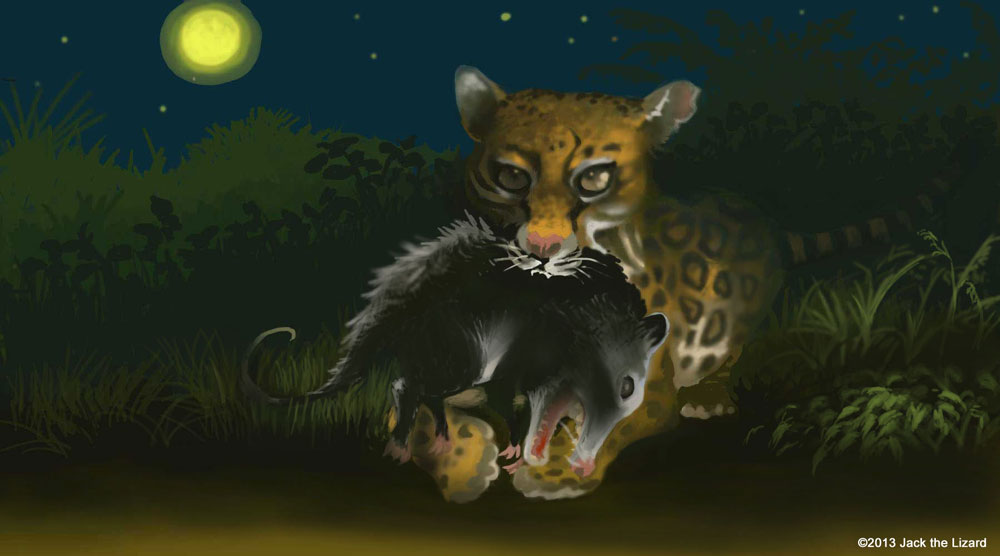
Because of their fur - Ocelot -
|
|
The Ocelot is the one of 6 wild cat species living in North America. However ocelots are very rare to find in U.S., probably they inhabits only in South Texas and Southern Arizona. They are smaller than bobcats, about 30in (75cm) in length not including tail, and have rounded ears. Ocelots have retractable claws with which they are able to climb up and down tree without difficulty. On the other hand predator of ocelots such as cougars and bobcats do not have retractable claws and they cannot climb tree like ocelots do. Ocelots were hunted for their fur and naturally their population was diminished. Since hunting of them is outlawed now they are recovering. Nevertheless in North America fewer than 50 of them are remaining in the wild. Habitats loss is most concerned threats for this wild cat and they are also killed by car. Ocelots live in dense vegetation area and rest in the branches or a hollow of trees during the day. They hunt variety of prey such as rats, rabbits, small bids and also eat armadillo, squirrel monkey and land tortoises in Central and South America where their habitats extend to rain forests, semi‐deserts, and river banks. |

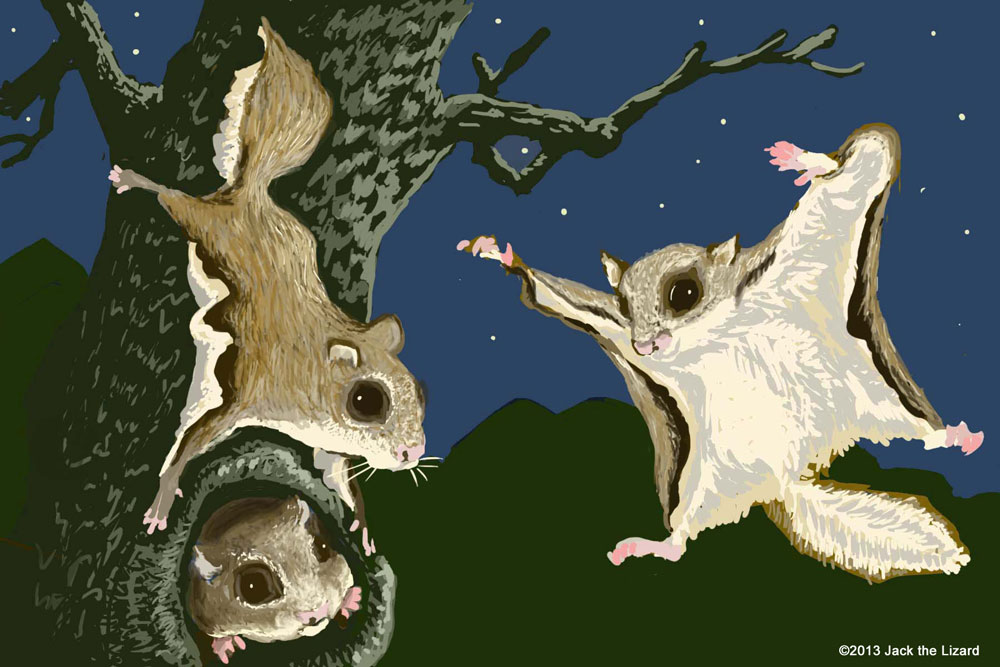
They are still hanging on - West Virginia Northern Flying Squirrel -
|
|
West Virginia Northern Flying Squirrels were designated as endangered species in 1985. At that time only 10 of them were found in their scattered habitats. They are apart from the other northern squirrel when the ice sheet was melted away about 10,000 years ago. The forests of old trees are suitable home for them because they can burrow in the hollows of large trees. Since industrial logging reduced their range, their habitats got cut off and became sparse. Although their population has increased to approximately 1100, the climate change also becomes the obstacle for their recovery now. West Virginia Northern Flying Squirrels are nocturnal animal and active even in winter. Mainly they eat several kinds of mushrooms and lichens. They also eat nuts, tree sup and insects. Since they do not hibernate, they reserve foods such as lichens and seeds in tree cavities and their nests. West Virginia Northern Flying Squirrels are prey for predators such as owls, hawks, marten and red foxes. On the other hand West Virginia Northern Flying Squirrels are contributed to scatter spores of fungi which help growth of trees by giving nutrition and water. |

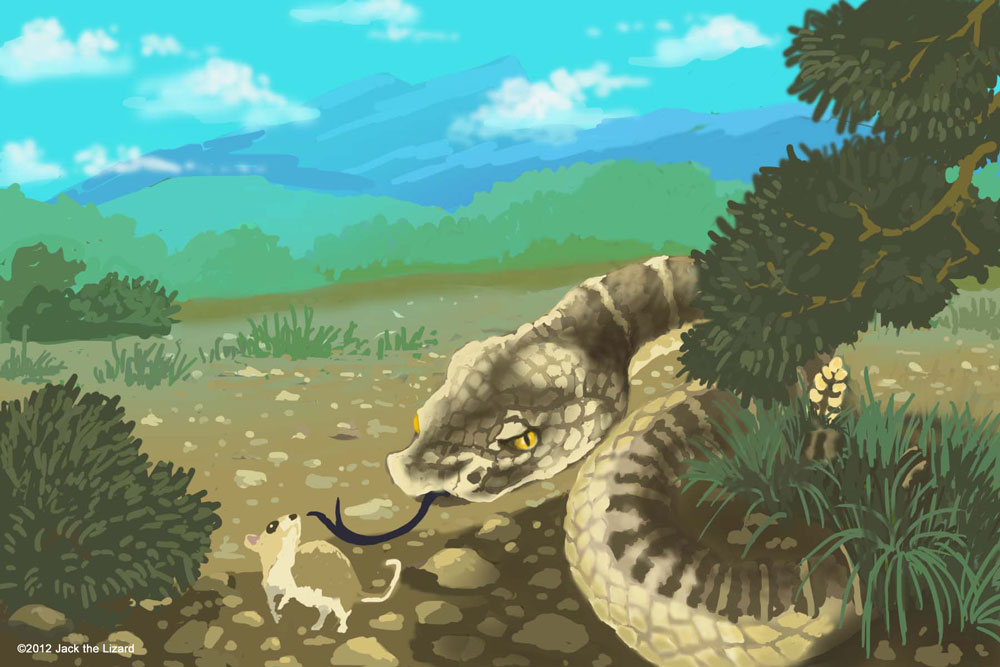
Please watch out for my sound - Rattlesnake -
|
|
All species of Rattlesnakes are indigenous to North America and South America. They are in viper family and all venomous. Approximately 30 rattlesnake species are found so far. Their typical features are a triangular head and rattles on the tip of their tale. Rattlesnakes can be found in varied habitats such as deserts, prairies, forest and marches. Their diets include rodents, small birds, lizards and insects. Rattle snakes make rattling sound to warn enemies or unidentified animals close to them. Young rattle snakes are vulnerable to predators such as crows, raccoons, weasels, coyotes and king snakes. In the United States about 7000 to 8000 people are bitten by venomous snakes each year, but it is extremely rare that individual died from snake bites. Approximately 20 % of those bites are dry, which signifies that no venom is injected to victims. |
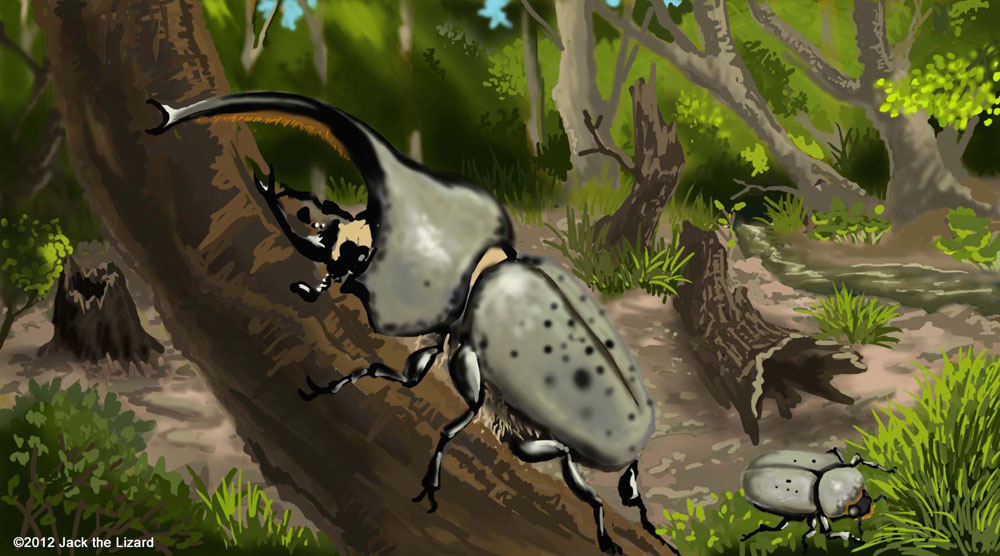
Grant’s Rhinoceros Beetle
|
|
Grant’s Rhinoceros Beetles (Dynastes granti) are found in Arizona, New Mexico, Utah and northern Mexico. The size of male beetle is about 2 to 3in (50 to 85mm) including horn. The Adults emerge from the ground in August or September. The lifespan of adult is about 3 to 6 months. The diet of the adults is probably sap of tree. Before larvae turn into adult beetles, they spend for one to two years under the ground. Their diet is rotten trees. Larvae eat variety of trees such as wild cherry, oak, pine and willow. In late summer Larva turns into pupa and molt three times during this stage. After 1 to 2 months a pupa transforms into an adult. Adults remain underground during the winter. By the way there is a different species of rhinoceros beetles, Allomyrina dichotoma in Japan. In summer Japanese kids and some adults love collecting rhinoceros beetles and having them as pets. |
Osprey the Bird
|
|
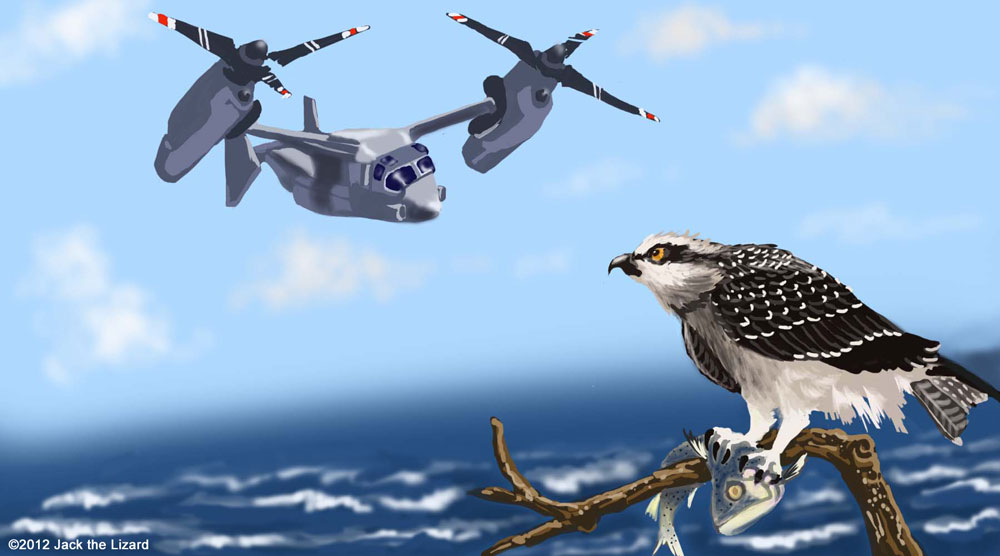
The United States Army Air Forces had started using the code name for Japanese war aircrafts recognition during WW2. At first boy’s or girl’s name were used such as Jack for Navy interceptor fighter and Frances for Navy night fighter. Later the name of trees or birds was also applied to this system. Not only for opponents but U.S. aircrafts have animal nick names as well. For example GM P-75 fighter is “Eagle” and Brewster F2A Fighter is “Buffalo”. Bell Boeing V-22 is the latest military aircrafts whose name is “Osprey”. V22 can take off vertically and landing like a helicopter. It can also fly fast and for long distance with a pair of powerful rotors at the end of the wings. Real Osprey is the bird of prey whose main food is fish. When Ospreys spot fish they hover above the water for a moment then plunge into the water. Occasionally Ospreys prey on amphibians, small reptiles, rodents and other birds. Nevertheless their habitats are always near water such as rivers, lagoons and wetlands for fish. If you can find many Ospreys at one place, that area is probably rich in biodiversity. They are widely distributed and can be found in the temperate and tropical zone on the Earth. Both “Osprey” need Peace on the Earth. |
Ambush killer - Mountain lion -
|
|
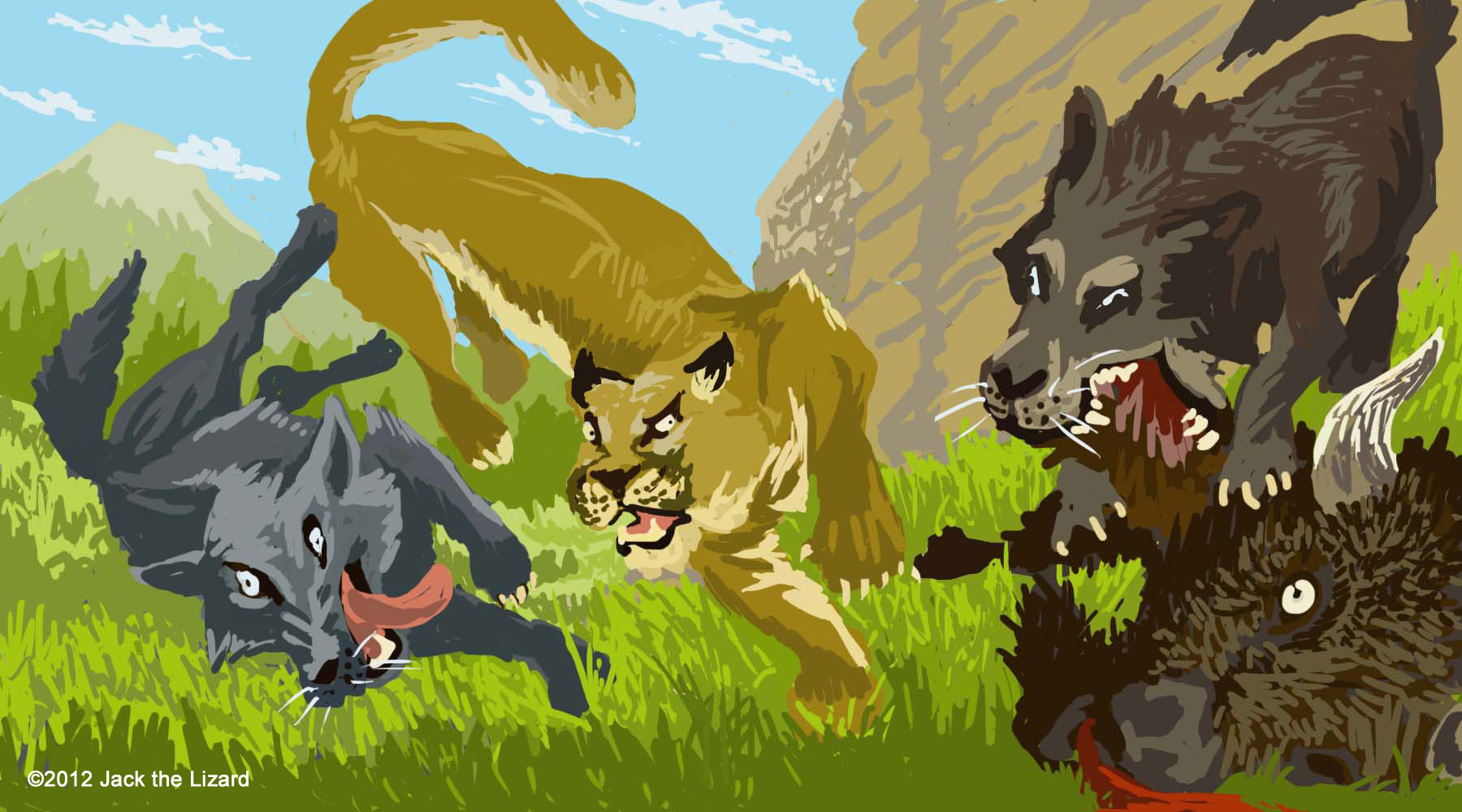
Mountain lions or cougars range from Northwest Canada to Most of South America and also part of Florida. They hunt variety of prey from large mammals such as mule deer, elk and moose to smaller ones such as porcupine, hares and mice. Mountain Lions compete with other predators such as gray wolves, black bears and grizzlies. Most adult Mountain lions are over 6.5ft (2m) long and equipped powerful hind legs which allow them to leap greatly. A large pack of wolves and bears are only threats for them and the presence of wolves can affect their behaviour and population. Mountain lions can adapt to all kinds of habitat types from forest to rocky desert and the prey population such as deer in their territory could be varied by them. They also kill smaller predators such as coyotes and bobcats. |

Big Cheek Little Fellows - Pocket Gopher -
|
|
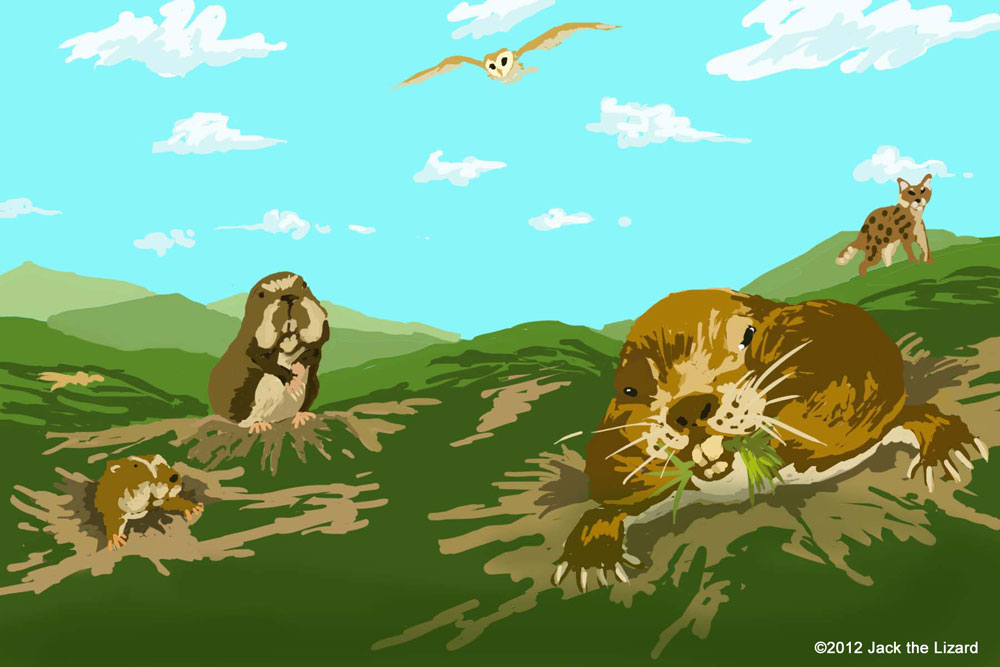
Pocket gophers range over from North America to Central America. They are burrowing rodents such as prairie dogs and ground hogs. They have more than 30 subspecies and their average size of body is about 10in (25cm). The distinctive feature is the large front teeth and the cheek pouch with which they carry food to their burrow. They are vegan, so they do not eat meat at all. They collect vegetation such as grasses, roots and leaves and stock them in their underground tunnel. Pocket gophers prefer soft soil and sometimes they consume vegetables for humans. For this reason they are considered as pests, but they have another roles that they enrich soil when they move around underneath of fields. They are eaten by mammals such as skunks, American badgers, bobcats and coyotes. Birds of prey such as owls and hawks also feed on them. Large snakes consume them as well. Another word many carnivorous animals depend on them. |
Giant monster “Gamera” still alive - Alligator Snapping turtle -
|
|
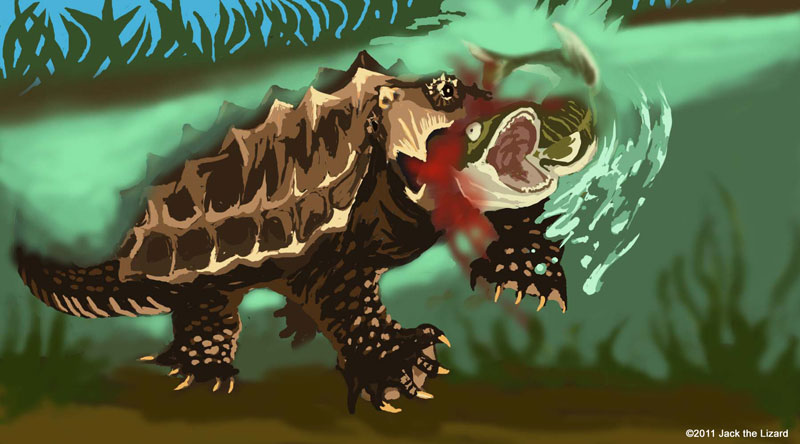
The Alligator Snapping turtle is the largest freshwater turtle in North America, about 16 to 32 in (40 to 80cm) shell length and weighs about 40 to 200lb (18 to 100kg). Only living close relative is the common snapping turtle. The carapace of the alligator snapping is very rough compare to that of the common snapping. The range is from Florida, east to Texas and as far north as Iowa. Alligator Snapping turtles live in deep muddy lakes, rivers, canals, and swamps. They are both active hunters and scavengers. During the day they ambush prey passing by in the mud. There is a worm-like lure on its tongue to attract fish. The preys are fish, crayfish, frogs, snakes, other turtles, small mammals and aquatic plants. In captivity they have lived up to 70 years. The oldest extinct species in the Alligator Snapping turtle family lived about 70 to 65 million years ago in North America. Its fossils were found in Montana. The fossils of other extinct species were found in Asia and Europe. |
I can survive for months without food - Gila Monster -
|
|
|
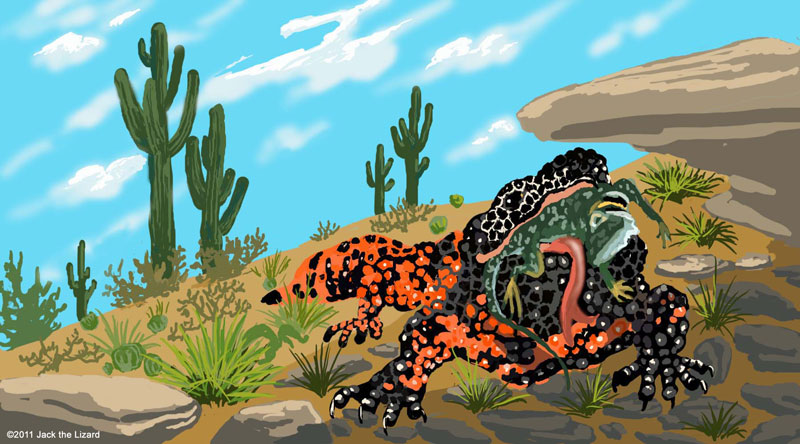
Certainly there are venomous snakes around the World, but venomous lizards? Now only two species are recognized as venomous lizards, Gila monster and Mexican beaded lizard. However monitor lizards and iguana in Australia may also produce venom in their mouth. Whereas the venom of those lizards is dangerous to humans, it is very rare that it causes human death. Nevertheless the drug is made from Gila monsters’ saliva as a treatment for diabetes.
Gila monsters live in the south- western states of U.S.A. and northwestern Mexico. The size is up to 2ft (60cm). There are two different Gila monsters, ones live in south called the reticulate and north called the banded. The habitats are scrubland, semidesert and grassland. They need sand, gravel or rocks to hide themselves. Gila monsters eat birds, eggs, lizards, frogs and small mammals. Since they inhabit harsh environment, they can stock fat in their tails. The family of Gila monsters includes extinct lizard from the late cretaceous period. In addition, the member of that family has not changed much their form. Therefore Gila monsters are often referred as living fossils. |
Wolf under Polar lights - Arctic Wolf -
|
|
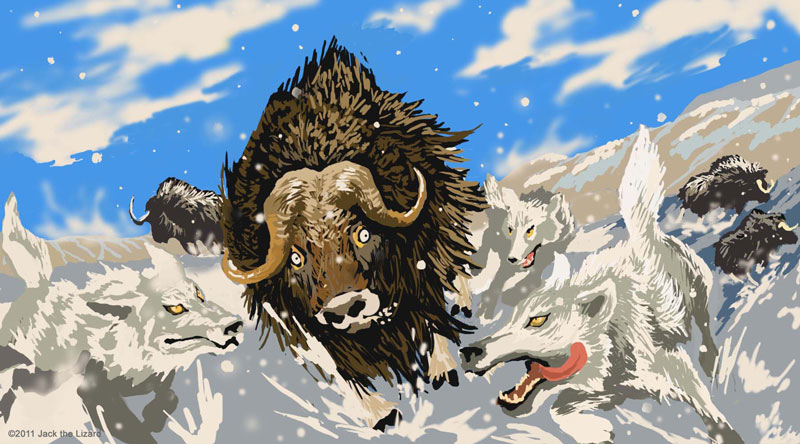
The home ranges of Arctic wolves are the northern parts of Greenland, the Canadian Arctic and parts of Alaska. The climate is extremely harsh, temperature can drop to -50°C (−58 °F) and 4 months of darkness in winter. Since food sources are limited in this environment, Arctic wolves have very broad territories and always remain on the move to follow caribou and muskoxen especially fall and winter. Arctic wolves usually hunt in packs of 2 to 20. They have great stamina to pursuit prey for long time and bring down with a powerful bite on its neck. Although caribou and muskoxen are main food for Arctic wolves, they also eat lemmings, arctic hare, seals and birds. Because of scarcity of prey Arctic wolves eat everything, skin, fur, bones leave nothing behind. |

Deputy of the Mississippi River - Blue Catfish -
|
|
|
Channel catfish is the most common catfish in North America. They live in the rivers, lakes and ponds. The range expands from southern Canada to northern Mexico.
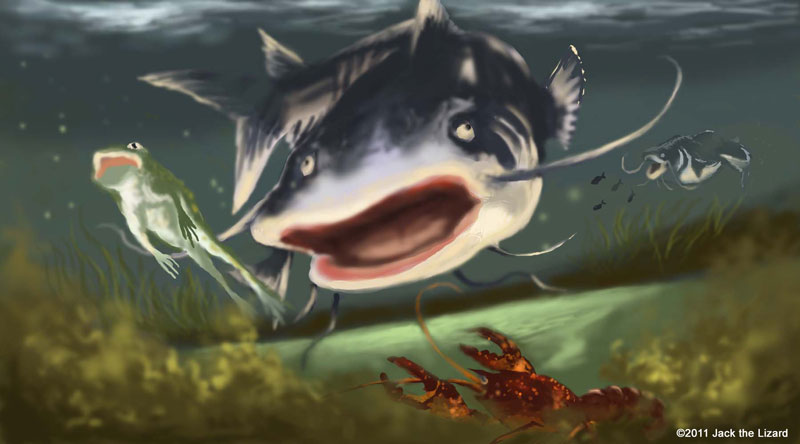
Channel catfish can detect presence of their prey in dark, muddy water, because their whiskers and noses are very sensitive to scent of prey. They eat variety of prey such as worms, crickets, small fish, crayfish and frogs. Even they bite soap, no wonder they are popular among angler. As framed-raised catfish, channel catfish is very popular food in the United States. One of the largest catfish in North America is Blue catfish. They live in Mississippi river drainage basin, including river of Ohio, Missouri, and Texas. The size can be reached over 50 in (100 cm) long and 100 lb (45 kg) in weight. Blue catfish gobble up whatever they can catch from fish to crayfish, mussels and frogs. |
Wolf impact
|
|
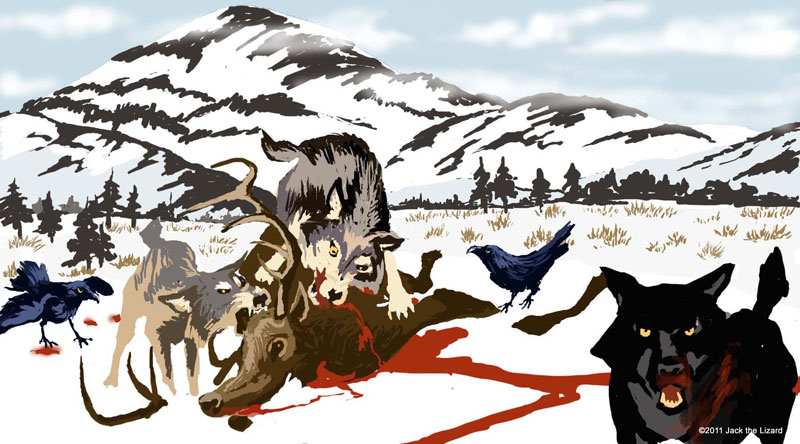
Wolves were back in the Yellowstone National Park in 1995. After the reintroduction of 14 wolves the ecosystem of the park has changed in so many ways. During the winter mostly wolves hunt elks. As the wolf population increased the elk population has declined. Some vegetation such as cottonwood, willows and aspens have recovered in the area lacking elks. Wolves also kill coyotes to reduce the competition for food and the population of coyotes in the park has declined. Now coyotes have moved their territories away from wolves. Some animals take advantage of the presence of wolves. Grizzly and black bears can scavenge wolf kills as well as bald eagles and ravens gather around the carcasses. Wolf population in Yellowstone National Park is 128 in 2010. |
Small distinguished reptile - Texas Horned Lizard -
|
Horned Lizards live in North America and have 14 species in their family so far. The Texas Horned Lizard is the largest among them and inhabits widely from the South-central United States to Northern Mexico. The body length is about 2.5 to 4.5 inches (6 to 11 cm). The habitat is sandy arid area with sparse plants. Texas Horned Lizards dig the burrows to regulate their body temperature, lay eggs and hibernate during the winter around September until May. Their main diet is harvester ants. They also catch beetles and grasshoppers occasionally. 
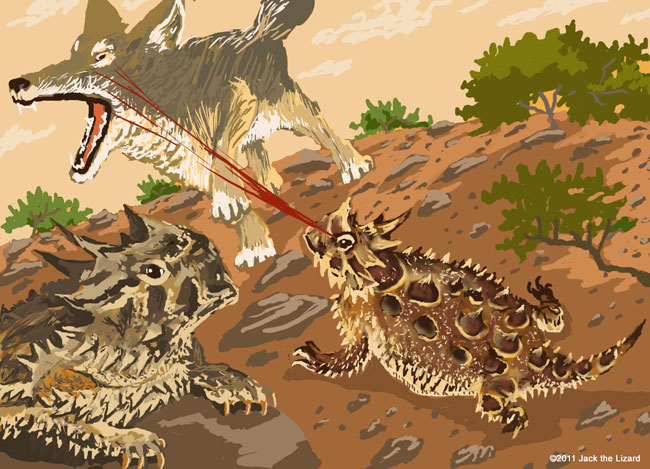
Jack the Lizard Texas Horned Lizards have several ways to defend themselves against predator such as coyotes and wolves. Flattening out their bodies and freeze is one way. Another way they change their color and blend into surrounds. They also puff out their body to make themselves difficult for predator to swallow. Finally they squirt blood from their eyes to scare predator away. |
|
Little fox on the plain - San Joaquin Kit Fox -
|
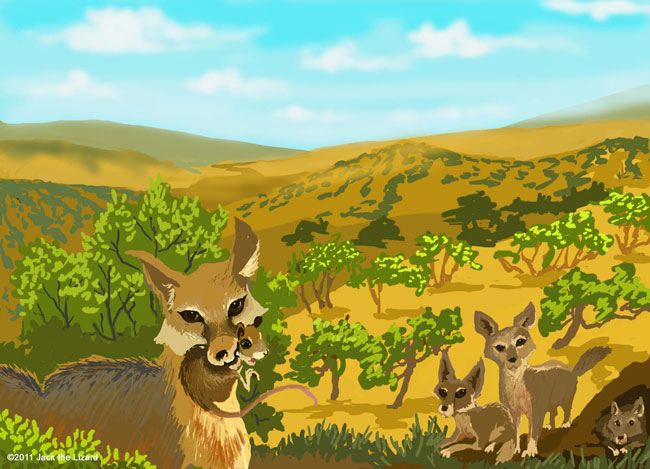
The Kit Fox is a housecat size small fox only living in North America. It can be found in Colorado, Utah, Nevada, California, Arizona, New Mexico, Texas and Northern Mexico. There are three types of kit fox, San Joaquin, Desert and Southern California. 
Jack the Lizard The home for San Joaquin Kit Foxes is the San Joaquin valley in Northern California. During the night they hunt kangaroo rats, cottontail rabbits, lizards, snakes and insects. To shelter themselves from heat and cold they use underground dens, which built by other animals. Those dens also provide their pups the protection against coyotes or owls. The habitats of San Joaquin Fox are scrubland, grassland and meadow, but they are degraded by housing or agricultural development. The San Joaquin Kit Fox is listed in the endangered species. |
Tennessee got not only music but Nashville crayfish.
|
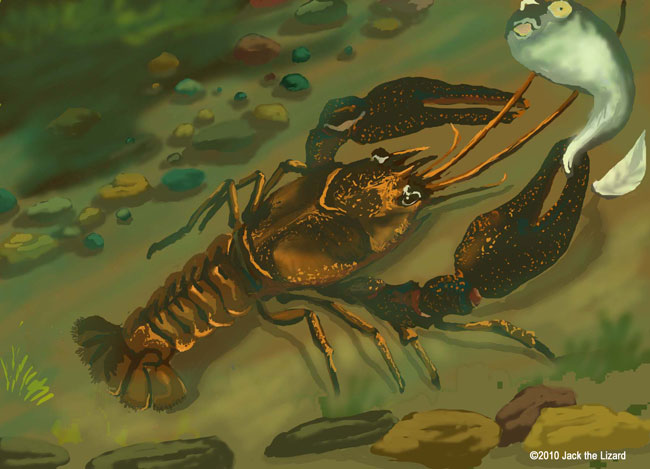
The Nashville crayfish lives, yes, in the area nearby Nashville. This crayfish are only found in that place on the Earth. That is why this little friend is very important. Nashville crayfish probably eat both plants and animals that they can catch. They can walk and swim well on the floor of ponds and streams. The habitat is covered with gravel and sand. Those rocks provide hiding place for them during the day and the shelters for females with eggs and young. 
Jack the Lizard Nashville crayfish need clean oxygen rich water to survive. Since they inhabit limited range, they are vulnerable to the incidents such as chemical spill and other contamination. To protect their habitat, other activities such as the constructions of roads and bridges, stream channel modifications and impoundments must be carried out with great caution. Nashville crayfish are endangered species. |
|
California Tiger Salamanders are unforgettable.
|
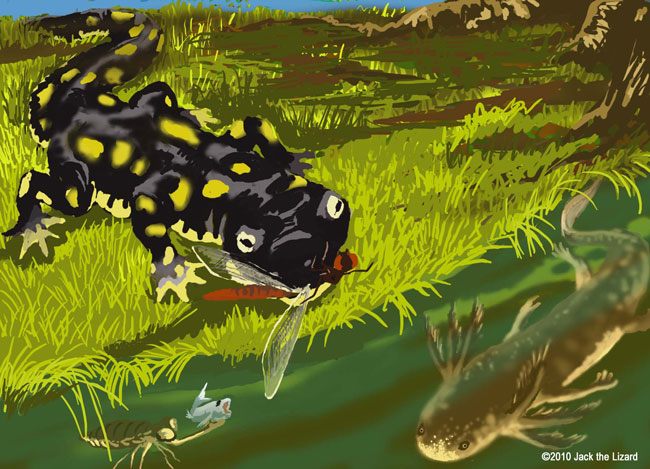
The California tiger salamander is about 7 to 8 inches (17 to 20cm) long. It mostly lives in the Central Valley of California, but also small population in the Santa Barbara and Sonoma County. The habitats are grasslands and low foothills. In fact, since California tiger salamanders are amphibian, there are two phases in their life. On land the adults spend most of their time in burrows which squirrels or gophers had used. However ponds are also necessary for them to breed. Especially vernal ponds which are temporally pools of water are important. After hatching aquatic life of the larvae lasts for 3 to 6 months. The larvae eat insects and tadpoles. The diets of adults are insects and fish. They are vulnerable to predators such as herons, egrets, fish and bullfrogs. 
Jack the Lizard The population of two counties is not stable because of loss of breeding habitats. Moreover non native tiger salamanders will reduce the population of California tiger salamander because of competition for food or interbreeding. |
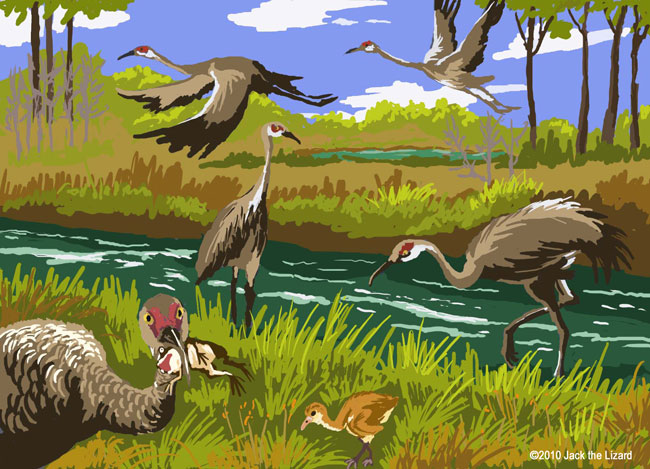
The critical habitat - Mississippi Sandhill Crane -
|
About 30 years ago there were only 30 to 35 individuals remained, due to habitat decline. But the cranes have been recovered gradually in the Mississippi Sandhill Crane National Wildlife Refuge. Now the crane population has increased to about 110 and continues to grow. 
Jack the Lizard It is very important to protect their unique habitat, wet pine savannas. The soil of wet pine savannas are generally wet at the surface and covered with low-growing shrubs and a few trees. There are plenty of foods for the cranes such as aquatic plants, seeds, insects, crayfish, frogs and rodents. |
|
I cannot live without you, prairie dogs
- Black-Footed ferret -
|
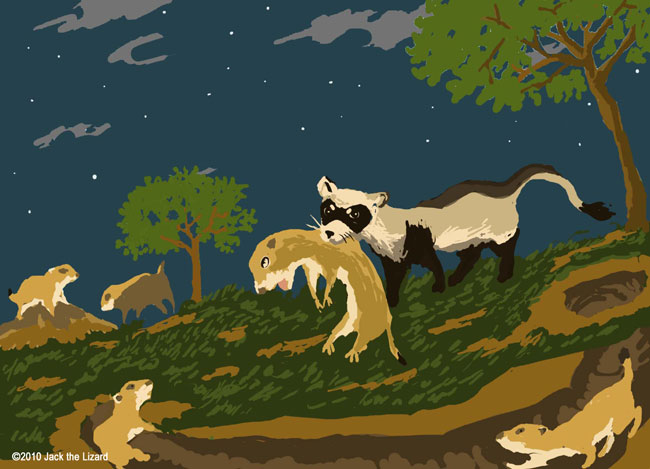
Black-Footed ferrets are prairie dog hunter, despite prairie dogs, 12 to 16 inches (30 to 40 cm), are about same size as Black-Footed ferrets,18 to 24 inches (45 to 55cm). They are active in the night and aim at sleeping prairie dogs in the burrow. During the day Black-Footed ferrets are vulnerable to the predator such as coyotes, badgers, hawks and eagles. In that case the burrows of prairie dogs turn to the shelters for Black-Footed ferrets. Black-Footed ferrets cannot survive without the colonies of prairie dogs. 
Jack the Lizard Once they are extinct in the wild. The loss of grassland in which prairie dogs inhabit is the main reason why Black-Footed ferrets died out in the wild. But the reintroducing programs have started since 1991 and they are coming back now. In the U.S. the population is about 1000 in the wild and captivities. |
Squid hunter - Short-finned pilot whale -
|
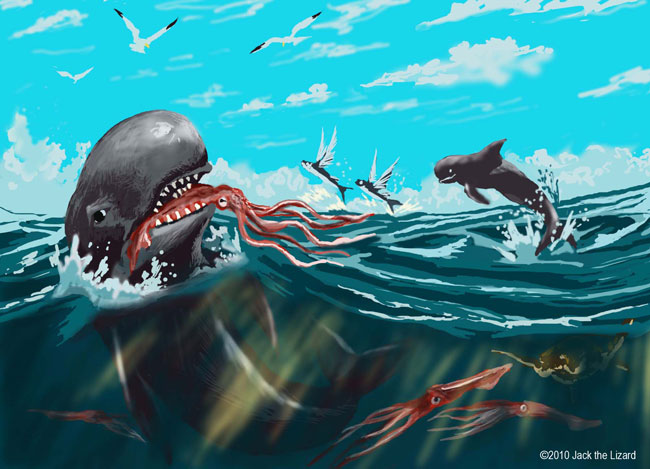
Rotund head is remarkable feature of pilot whales. Long-finned and Short-finned pilot whales are in the pilot whale family. 
Jack the Lizard Short-finned pilot whales can be found from the temperate to the tropical oceans of the world. They usually form groups of 15 to 50 individuals. Main diet is squid, but they also eat fish and octopus. During the night they dive into deep water between 300 to 500m (1000 to 1600ft) to catch prey. The Short-finned pilot whale grows up to 7.3m (24ft) in length and weighs about 3000kg (6600lb). The longevity is 45 years for males and 60 years for females. The Long-finned pilot whale has longer flippers and reaches about 7.6m (25ft). Both of them are the members of the dolphin family, not whales. Pilot Whale Movie is here.
|
|
Desert tortoise everlasting
|
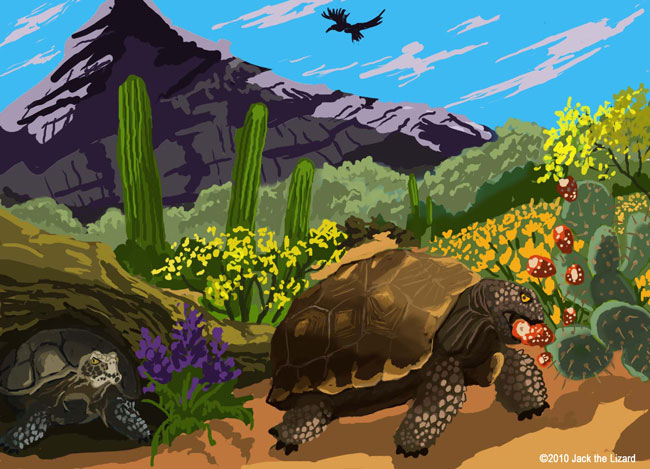
Turtles diversify their living space. Turtles live in aquatic environment such as swamps, lakes and rivers. Sea turtles choose marine life. The other like Terrapins settles in blackish water area in which seawater blend into flesh water. Tortoises are land turtles. Desert tortoises occur in the Mojave and the Sonoran desert in the southwestern U.S. and northern Mexico. The size is about 9 to 15 inches (23 to 34 cm) in length and the height is about 4 to 6 inches (10 to 15 cm). 
Jack the Lizard The diets of desert tortoises are grasses, flowers and fruits. Since they can get enough water from their food and store water in their body, they can survive without water for a year or more. They are also adapted to extremely high temperature environment. The ability to dig their own barrows provides the shelter for them to avoid heat during the day. In fact they are probably spent most of their time in their barrows. The eggs and juveniles are vulnerable to natural predators such as ravens, roadrunners, gila monsters (venous lizard) and coyotes. The threats for adult are diseases and human activities such as poaching, mining, sheep & cattle grazing and off-highway vehicles. Desert tortoises live up to 80 years or more in the wild. Desert Tortoise Movie is here.
The coloring page of the desert tortoise is HERE!! |
Wolffish bite hard
|
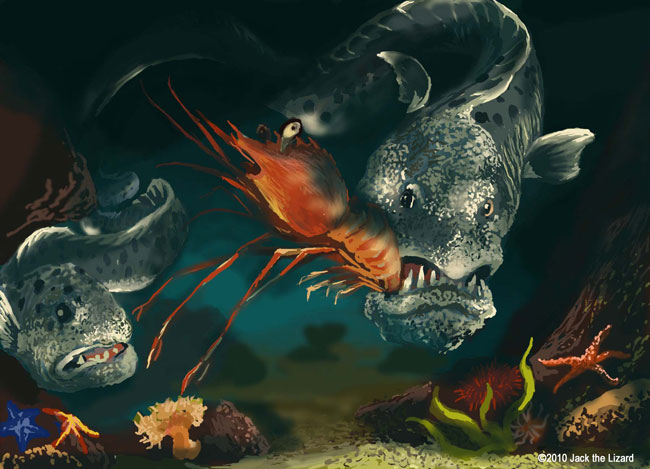
The family of Wolffish includes five species, Northern, Atlantic, Spotted, Bering Wolffish and Wolf eel. They live in cold waters of the northern Pacific and Atlantic Oceans. Since the natural antifreeze is in their blood, they can survive in water of -1℃. The maximum size may reach approximately 2m (7ft) and 24kg (50lb). 
Jack the Lizard They can be found about 50 to 1000m (160 to 3280ft) in depth. The main prey of Wolffish is invertebrates found on the bottom such as crustaceans and mollusks. Wolffish can crash hard shell of crabs or clams with its powerful jaw. The role of Wolffish as predator is very important to control the population of sea urchin and crabs. Wolffish prefer to stay in rocky or seaweedy surroundings to hide. Wolffish Movie is here.
|
|
Red wolf Come back
|
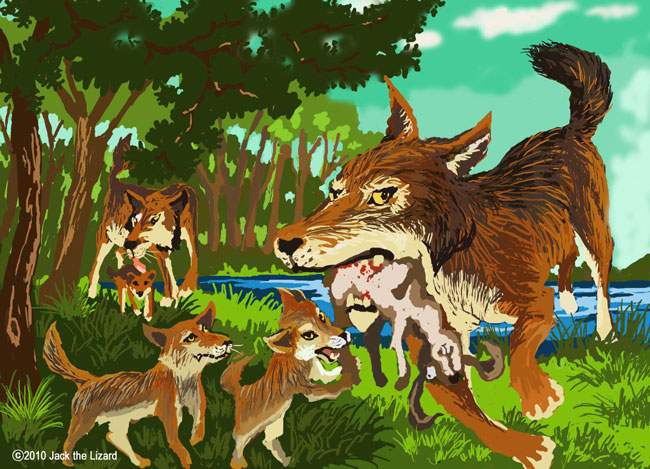
The Gray Wolf is more common and does not face extinction at least now. But Red wolf is a critically endangered species. In fact only 17 red wolves remained in the wild by 1980 because of the predator control program and deforestation of habitat. Despite of the recovery plan had begun in 1973, Red wolves were considered extinct in the wild between 1980 and 1987. Then the captive breeding plan started from survived 14 wolves. As enough number of red wolves was bred, the U.S. Fish and Wildlife Service released 4 pairs of red wolves into the Alligator River National Wildlife Refuge in northeastern North Carolina by 1987. Now 100 to 120 red wolves live in the wild and approximately 207 of them in captivity. Nevertheless illegal hunting and interbreeding with coyotes are still concerned as threats. There are no populations of wild red wolves in the World but in North Carolina. 
An adult red wolf is about 4 feet in length and weighs about 45 to 80 pounds. Red wolves hunt mice, rabbits and deer but also eat nutria and raccoons. The lifespan is about 7 to 8 years in the wild and 15 years in captivity. |
Blunt-nosed Leopard lizard
|
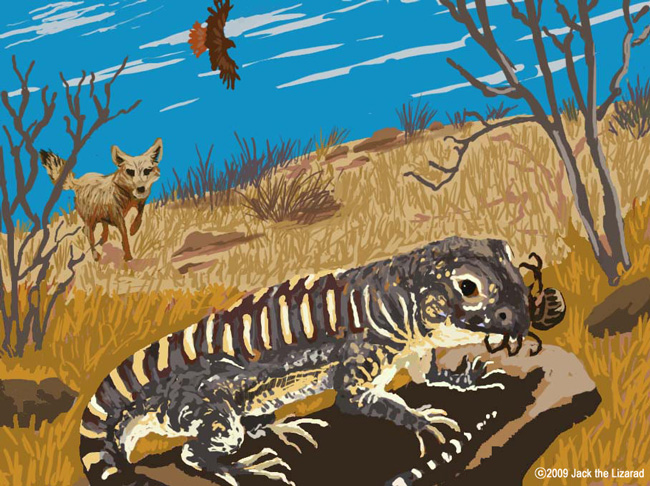
Probably you cannot remember the name of this lizard. But it is listed as an endangered species. Blunt-nosed Leopard lizards primarily live in the San Joaquin Valley in California. The reason of decline is habitat destruction such as irrigation, pesticide and urban development. 
The size of adult male is about 3.4~4.7 in (9~12 cm), the tail is not included. The female is slightly smaller than the male. The diets are insects and other lizards such as coast horned lizards and spiny lizards. They eat almost any animals can be possibly swallowed. Blunt-nosed leopard lizards use the burrows as shelters to avoid heat and predator. Those burrows are abandoned by small animals such as ground squirrels and kangaroo rats. |
|
Right whale graceful back line
|
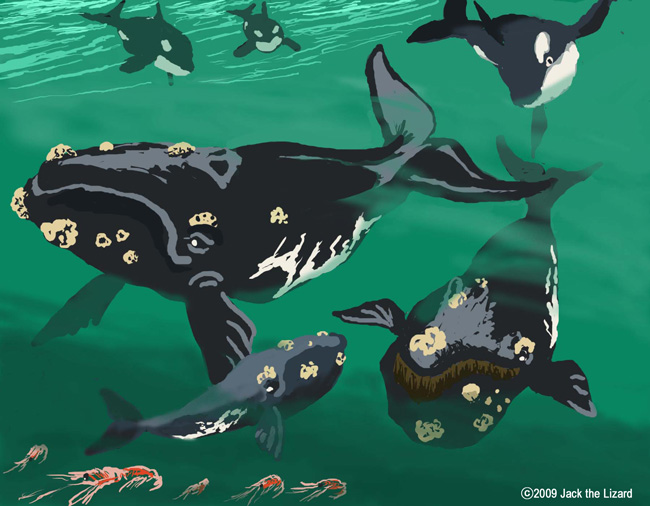
Right whales do not have dorsal fins, so their backs exhibit beautiful streamlines. 
Three species are recognised as Right whales, North Atlantic Right whale, North Pacific Right whale and Southern Right whale. Both Pygmy Right whale and Bowhead whale resemble Right whale in appearance but they are different species. North Atlantic Right whales live in the North Atlantic, the population is about 300. North Pacific Right whales are distributed in the eastern North Pacific and Sea of the Okhotsk, the number is about 200 to 300. Southern Right whales live in the southern hemisphere; still about 10000 of them are left. The size of Right whale is about 45 to 55 ft (14 to 17 m) in length and weighs about 140,000 lb (70 tons). They eat krill and zoo plankton with baleen which has the filtering function. Right whales defend their calf by using tails against orcas. The life span is unknown, but they can live at least 50 years and may surpass 100. |
Digging own home - Pygmy Rabbit -
|
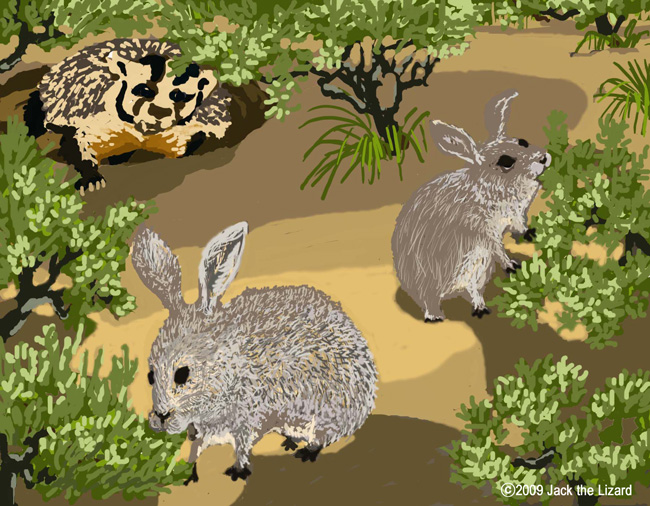
The Pygmy Rabbit is the smallest rabbit in North America, about 9.25 to 11.65 in (23.5 to 29.5 cm) long and weighs about 0.8 to 1 lb (350 to 450 g). The habitat is the place with an abundance of tall sagebrush which is primary food for the Pygmy Rabbit. The lifespan is about 3 to 5 years. Pygmy Rabbits are prey for predators such as coyotes, badgers, weasels and raptors. 
The range of the Pygmy rabbits are the great basin and confining intermountain regions, included parts of Montana, Idaho, Wyoming, Utah, Nevada, California, Oregon and Washington. Sadly, one of their sub-species, the Colombian Basin Pygmy Rabbit is probably extinct in the wild. The reasons are such as a diminishment of sagebrush, developments included oil and gas, and wild fire. Many sagebrush areas turned to rangeland. No sagebrush no Pygmy Rabbit. In addition, the gene pool of Pygmy Rabbits lost its diversity with the fragmentation of habitats. This means animals will be vulnerable to disease. The uniqueness of the Pygmy Rabbits is not only that they are small but also they are the only rabbits to dig their own burrows in North America. On the other hand most North American rabbit use burrows of other guys such as foxes, woodchucks and badgers. |
|
The Cat, beautiful, small and Wild – Jaguarundi
|
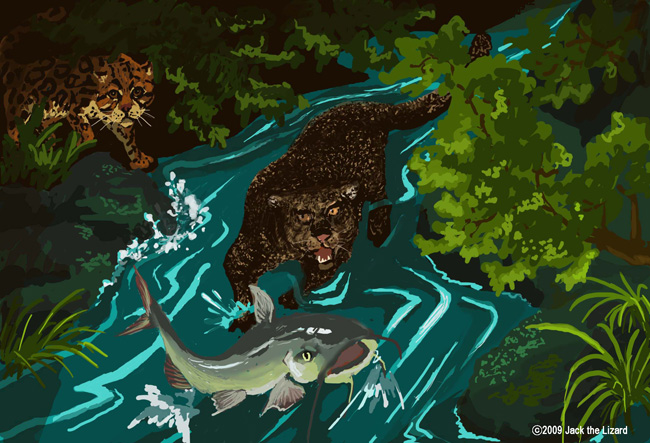
Big cats always get noticed, but small ones like Jaguarundis hardly. The Jaguarundi is slightly larger than housecat, about 30 in (65 cm) in length and weighs about 13 lb (6 kg). The appearance is like an otter. It has a long body with short legs and a long tail about 20 in (45 cm). The colors are dark grey, chestnut brown, or red. In the dense forest the far usually gets darker color. 
Jaguarundis inhabit lowland such as scrub, forest margin and savannah woodland. They hunt during the daytime or in the twilight. The preys are birds, small mammals, reptiles and fish. Eight types of jaguarundi can be found in the United States, Central and South America. In the U.S. Sinaloan Jaguarundi lives in Arizona and Gulf Coast Jaguarundi is in Texas. Both of them are listed in endangered in the U.S. and extremely rare to be observed. Behind one is an Ocelot which is also endangered cat because of habitat loss. |
The snail eater
|
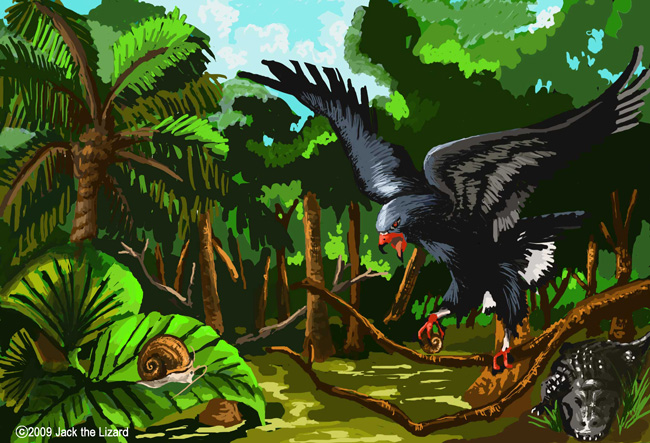
The Everglade Snail Kite is a kind of hawk which can be found from central Florida to South America. The wingspan is about 46 in (120 cm) and the body length is about 18 in (45 cm). The habitats are flesh water marshes and shallow edges of lakes. 
In Florida apple snails are main food for Everglade Snail Kites. Their curved beak is adapted to pull the snail meat out of the shell. They rarely eat other food such as small turtle, crayfish and fish. Everglade Snail Kites are widely distributed but they are endangered in Florida. They heavily depend on water and cannot breed without water nearby. But wide range of the wetlands in central and South Florida are contaminated or lost. Water management is the most important action for the survival and the recovery of the Snail Kites. |
|
Wyoming toad comeback
|
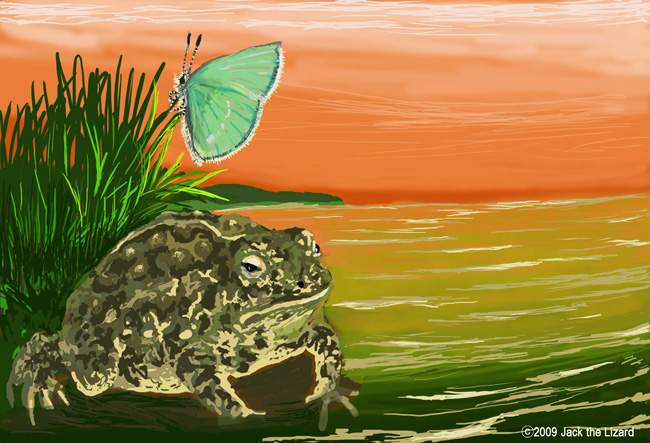
Wyoming toads are a Ping-Pong ball-size Toads, about 2.2 inches in length. The habitats are prairies beside rivers or lakes. They need short grass and warm, shallow water. The diets are small insects such as ants and crickets, and some other arthropods. 
Everybody thought they were extinct, but in 1987 a fisherman found some of survivors at Mortenson Lake in southeastern Wyoming. Then recovery plan has been started. Several zoos are participated in the captive breeding program with U.S. Fish and Wildlife Service and reintroduced tadpoles, toadlets, and toads into the Laramie River basin of Albany County in southeastern Wyoming. |
We can save Smalltooth sawfish
|
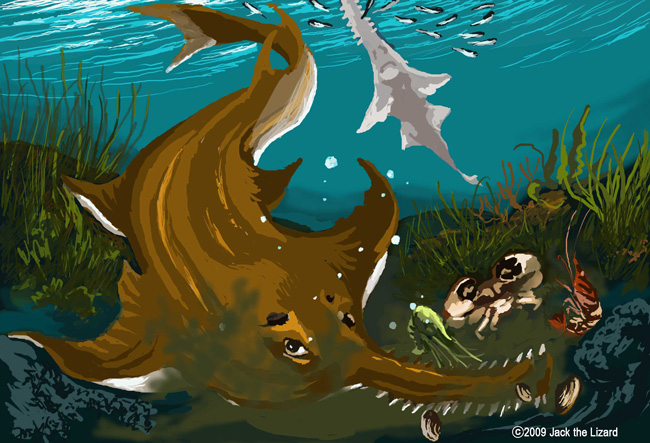
Smalltooth sawfish are relative of sharks' family. The ancestor of sawfish appeared 56 million years ago. 
They live in the coast of Florida. The habitats are shallow waters of tropical lagoons, river mouth and bays. They grow 18 ft (5.5 m) in length. The lifespan may reach up to 25-30 years. The preys are small fish, crabs, shrimps and mussels. They use the saw to strike fish or to dig mud and sand after preys. Smalltooth sawfish is critically endangered species because of bycatch in fisheries, low rate population growth and habitat loss. |
|
Chubby tough guy
|
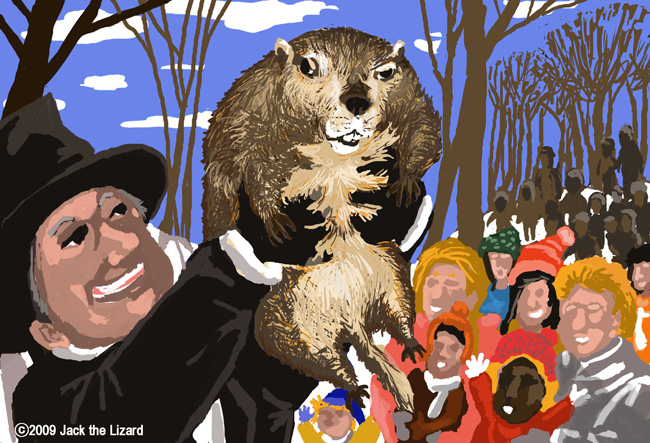
The habitat of Groundhog (woodchuck) is very broad. It covers from eastern and central United States to part of Canada and Alaska. The body is about 18 to 24 in (40 to 65 cm) long. The weight is about 13 lbs (6 kg). Groundhogs eat plants, flowers, bark, fruits and insects. They are prey to larger mammals such as foxes, coyotes, bobcats, cougars and bears. The lifespan is about 10 years, but in captivity it exceeds 20 years sometimes.
They live in burrow and hibernate during the winter. February 2 is Groundhog Day in the United States and Canada. On this day if the groundhog sees his shadow, winter will last 6 more weeks. If he does not see it, spring will arrive early. The famous groundhogs are Phil and Willie. Phil lives in Punxsutawney, Pennsylvania and Willie is in Wiarton, Ontario. To see a photo of wild groundhog, click HERE! To go to the coloring page of ground hog, click HERE! |
King of the everglades
|
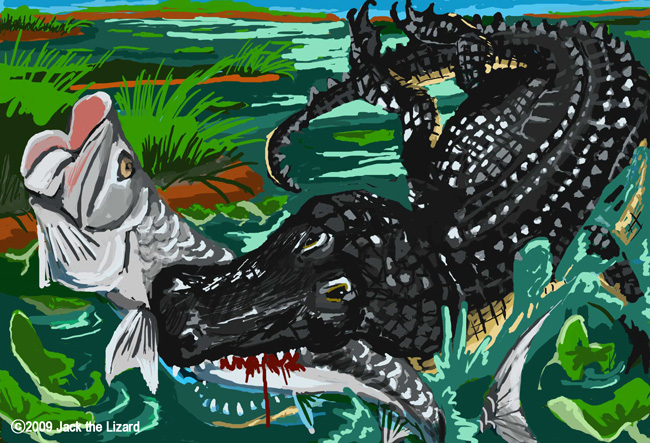
American Alligators live in southeastern United States. The habitats are lakes, swamps, marshes and freshwater rivers. They eat fish, turtles, snakes, birds and small mammals such as raccoons and deer. Males grow to about 10~15ft (3~4m) in length and weigh about 1000 lb (454kg). Females are smaller about 8~10ft (2.5~3m). 
The mother makes a nest which is made of mud, sticks and leaves. After hatching in the nest the young are taken care of by mother for 2 years. Although Adult American Alligators are top predators, they are vulnerable to predators such as snakes, birds, bobcats and other alligators when they are young. |
|